Backdrop
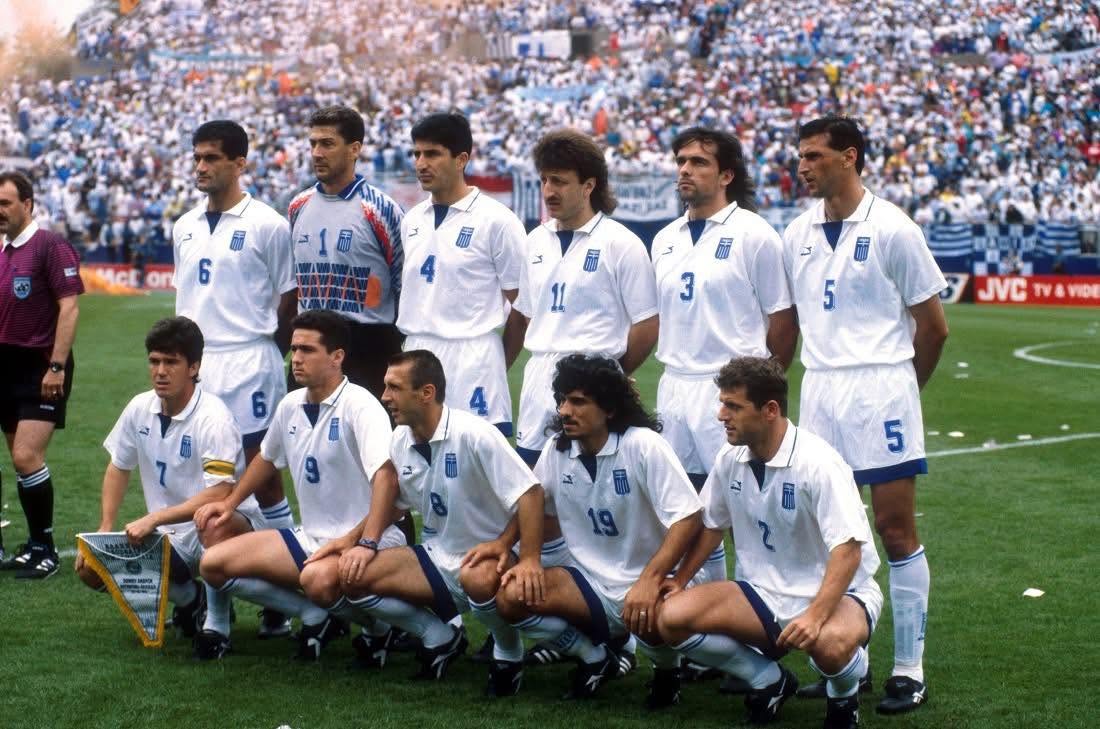
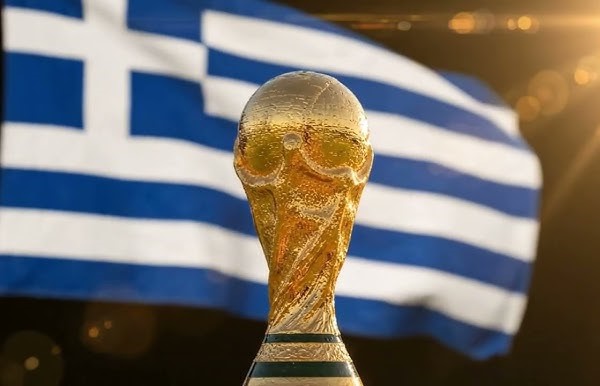
The FIFA World Cup of 1994 in the USA holds a very strong spot in my heart, so when we at Hellas Football decided to do a piece about how Greece achieved their first qualification berth, I was going to do this no matter what.
The reasons this World Cup is so special for me is because I lived it like no other. I watched every game and I could not get enough of the stadiums, crowds, goals, attacking football and just the quality of it all. The fact Greece had qualified for it may have had something to do with it, as well as my admiration for Roberto Baggio, so we know how it ended for both ironically.
That aside, I think there was something special about football in the 90s as it stepped up in professionalism – some of the talents were a great joy to watch and this World Cup had many.
When I put my hand up to do this, I thought, I am really going to deep dive into this and try to grasp how Greece did such an amazing job to remain undefeated in qualifying, only to endure such a horrible campaign on the biggest stage of them all, of which I am sure many of us reading this can remember our personal accounts of the three games.
The other items that I have always wondered about were player selections, how it came that stars well into their 30s were such key players versus others who I considered much more skilled, and what could have been.
Qualifying Group Draw
The draw for the qualification groups was done on December of 1991. Greece were in pool 4 and drew Russia from pool 1, Yugoslavia from pool 2, Hungary from pool 3, Iceland from pool 5 and Luxembourg from pool 6.
The top two teams would qualify from the groups and it was set to be a battle between Russia, Yugoslavia and Greece, who were hoping to make history and get to the grand stage. However, in October 1992, after Yugoslavia’s games with Russia and Iceland were postponed, FIFA banned the Yugos after the United Nations made sanctions on the republic stemming from the Yugoslav Wars.
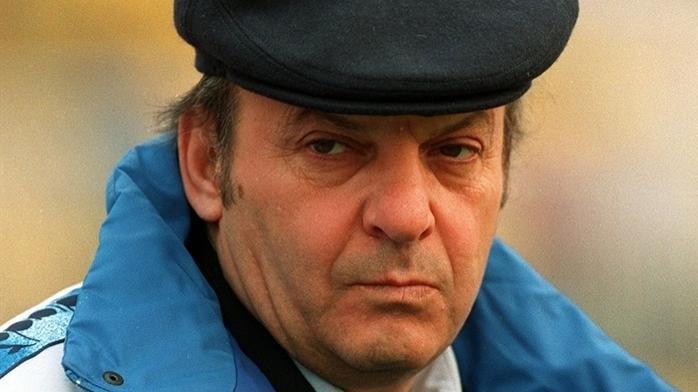
The Ethniki had a huge chance to qualify now and coach Alketas Panagoulias would be the man in charge after he had led Greece to their only other major tournament appearance previously, at Euro 1980 in Italy.
Qualifying Group Matches
Game 1 – Greece 1-0 Iceland
Greece and Iceland would get UEFA Group 5 under way on May 13, 1992 at the Olympic Stadium in Athens.
A small crowd of under 3,000 would see Greece win 1-0 thanks to a header from Takis Sofianopoulos in the 28th minute – the striker’s first and last international goal.
The match would see Giorgos Mitsibonas make his penultimate appearance for the Ethiniki, and the centre-half made his final bow in the next game played in September, a 3-2 friendly loss to Cyprus. The narrow win over Iceland was also the last of Antonis Georgiadis as coach.
Following Greece’s home win, Iceland went onto beat Hungary 2-1 in Budapest which was a big blow for the Hungarians. But they would bounce back with a 3-0 away win over Luxembourg.
Game 2 – Iceland 0-1 Greece
The Ethniki’s next qualifier would be against Iceland away and it would be tricky, but Greece played well and came away 1-0 victors once again, thanks to a header from Giotis Tsalouchidis.
Notables from this game were the appearance of Giorgos Donis, a second cap for free-kick maestro Kostas Frantzeskos, and a back four that would feature heavily – Stratos Apostolakis, Stelios Manolas, Giannis Kalitzakis and Thanasis Kolitsidakis, the latter having been brought in under Panagolias’s reign.
Greece were off to a good start with four points in the bag (this was the last campaign that offered two points for a win). They were now two points clear of Hungary and Iceland, with the latter having a game in hand.
Russia would join Greece on four points with wins over Iceland and Luxembourg in October ’92.
Game 3 – Greece 0-0 Hungary
Greece’s last game of 1992 would be at the Kaftanzoglio stadium in Thessaloniki, and a crowd of over 35,000 would see the Ethniki host Hungary in a tight match that had a lot riding on it. Both teams had chances to win the game, but it would end in a 0-0 draw which highlighted one of Greece’s dilemmas – scoring goals.
Vasilis Dimitriadis was the team’s striker, but the AEK forward did not have a great goals-to-game ratio at international level. Plus, the team, whilst solid defensively, weren’t creating a huge amount of chances as of yet.
Game 4 – Greece 2-0 Luxembourg
The New Year (1993) saw Greece kick off Group 5 again and this time at home to Luxembourg in Athens at the OAKA on February 17, a match which finished 2-0 to the hosts.
Greece opened the scoring on the half-hour mark after a dubious penalty was awarded on Frantzeskos, which Dimitriadis converted to score only his second goal for Greece, and what turned out to be his last.
Greece’s second goal came from a very common way throughout this campaign, a free-kick taken by Apostolakis saw Tasos “Rambo” Mitropoulos rise up and head home in the 65th minute.
Halfway Mark
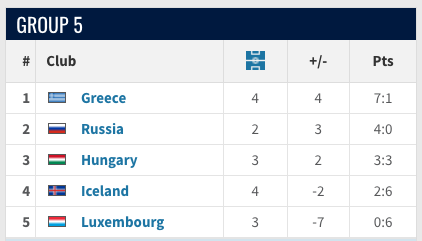
This put Greece half of the way there. After four games Greece had seven points with three wins and a draw. They had scored four and were yet to concede.
The way the draw had been done, Greece had more games earlier on than Russia, but as long as the Ethniki kept winning points and with Iceland the only other team on four games with just two points, the standings meant Greece’s next game in Hungary was a vital match.
Game 5 – Hungary 0-1 Greece
In preparation for the big away match with the Magyars, Greece played an away friendly with Austria on March 10. Panagoulias used this match to try some new combinations. However a dreadful start saw Greece down 2-0 after 13 minutes, and after settling down, a young man by the name of Nikos Machlas would score on debut.
Greece would go on to lose 2-1, but were unlucky not to score an equaliser. The match saw Giorgos Giorgiadis get his Greece debut as well as Christos Kostis, along with a return to the Ethniki fold for Panathinaikos midfielder Kostas Antoniou. Incidentally, these were combinations I wished I saw more of down the line as things would pan out.
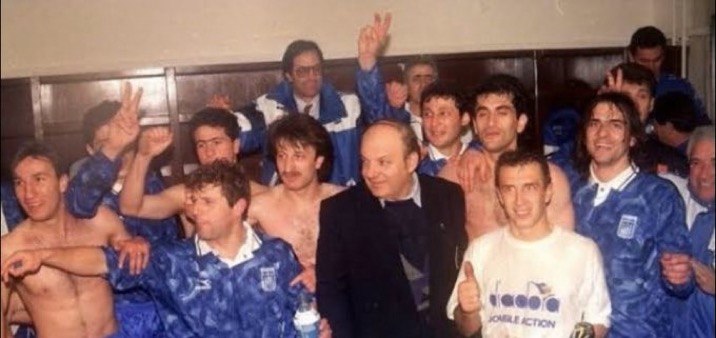
Bring on Wednesday, March 31st in Budapest – Panagoulias and his men could make a big statement for World Cup Qualification.
For this match, the former US Olympic coach reverted to a line-up very in line with the USA 94 DNA of the Ethniki, the only exception being Spiros Marangos as a starter, although he was in good form in ’93 at Panathinaikos.
The Greek team would play a good game, hardworking and not intimidated by the heavy Hungarian tackles early on. Instead, later on, the Greeks would give it back to the home team.
Greece’s new striker, Machlas, combined well with the midfielders and, with captain Mitropoulos, was able to cause many problems for the Hungarians. Apostolakis, I have to say, was a stand-out for Greece; he ran quality possession all game and put in good quality passes throughout the match.
The Panathinaikos defender was the star on a historic night. A nice backheel from Antoniou had Nikos Tsiandakis run onto the ball and send a cross into the box. Thankfully for us, the Hungarian defender used his arm to stop the cross (this was completely unnecessary), thus a penalty was awarded and Apostolakis blasted home from the spot in the 70th minute.
The final whistle saw the Greeks celebrate a big win. They had withstood heavy Hungarian pressure and were now favourites to qualify for the World Cup.
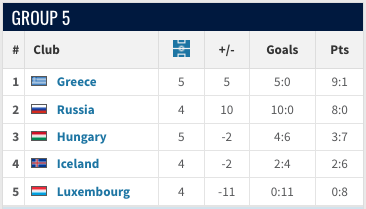
With Russia winning their next two games against Luxembourg and Hungary whilst scoring 7 goals in those matches, it was now a battle of who would win the group. This was further cemented when Iceland could only draw with Luxembourg.
Game 6 – Russia 1-1 Greece
It was May now and the Ethniki would face their hardest test of the campaign and by some distance: away to Russia. Both teams were undefeated and a win for either would give them the advantage for top spot in the group.
The Russians had scored double the amount of goals Greece had scored and both teams hadn’t conceded a goal yet, so it was certainly an enticing encounter only for the playing pitch to look a total disgrace.
Panagoulias went with the same line-up as per the Hungary match and Greece were able to hold their own in Moscow as the Russians certainly proved a cut above their previous opponents.
Despite Russia dominating possession, Greece took the lead right on half-time, a Tsiandakis freekick was headed home by Mitropoulos.
In the second half, Greece were just focused on defending and some silly challenges in the box displayed warning signs, with many lunging challenges that firstly were lucky not to incur a penalty, but also ones that would allow the attacker to get away if played right.
In the 70th minute, a challenge from Apostolakis brought down a Russian attacker and the Danish referee pointed to the penalty spot from which Igor Dobrovolskiy duly converted.
The draw saw Greece maintain top spot, and a couple of weeks later, Iceland would do the Ethniki a favour and hold the Russians to a 1-1 draw in Reykjavik. That meant, provided Greece beat Luxembourg, the final match between Greece and Russia would be a play-off for first spot despite both teams qualifying.
Game 7 – Luxembourg 1-3 Greece
Greece’s final away game, against the Luxembourgers, was on October 12th. One puzzling item from all these games is to pin point who played left-back. In this game, three defenders lined up: Apostolakis on the right, Manolas in the centre and Kalitzakis, a well-known centre-half playing next to him. It seemed in the games like this that Panagoulias liked to play two CBs with Apostolakis and Tsiandakis running the wings.
Greece won the game 3-1 and netted some much-needed goals. They came first from Machlas, then Apostolakis scored an excellent second with a low, powerful shot from out wide that’s worth watching, and Dimitris Saravakos belted in an absolute screamer to mark Greece’s third, another well worth watching.
Game 8 – Greece 1-0 Russia
The final match of the campaign, played on November 17th at a packed OAKA, was a chance for celebration at the end of a historic campaign as Greece and their fans celebrated their maiden World Cup qualification. But be that as it may, the match with Russia was another good chance to test the team out. This was not the hardest campaign the team had experienced and the match against Russia was a good opportunity to see how we had progressed since the tough match in Moscow six months earlier.
The Greek line-up had two surprises, one being Vasilis Ioannidis making his debut, the Olympiacos defender taking the place of the injured Kalitzakis, and his club colleague Kyriakos Karataidis started start instead of Kolitsidakis at centre-back.
It should be noted Greece put in a good performance and the game was played at a good pace.
Greece’s pressure paid off 11 minutes from time when a Nioplias freekick found Machlas whose famous flanking header found the back of the net and OAKA would light up in flares as fans went crazy with celebrations. The match would be stopped for four minutes to let the flares smoke clear and the Russians came in hard to find an equalizer.
It’s not something remembered by many but Russia actually scored a legitimate goal in stoppage time, however the Gabon linesman had raised his flag for offside despite replays showing Dobrovolskiy was onside.
Final Standings

Road to America
It’s interesting to see how Greece performed after qualification was finalised at the end of 1993. After all, the average age of the team was for the most part in the late 20’s – Greece would on average be from 28 to 30, whilst most of their opposition was mid 20’s and, at some point, Panagoulias would need to select a 22-man squad.
Greece’s first friendly match in 1994 was in March against Poland at the Kaftanzoglio. The match would see the debut of Ilias Atmatsidis in goal after subbing off veteran 35-year-old Antonis Minou.
Minas Hantzidis also made his debut, but the midfielder only lasted 29 minutes due to injury. The match would also see 33-year-old Savvas Kofidis return to the squad. Despite a poor scoring run at national and club level, he would feature heavily in the team.
The Poland game was not great and finished 0-0, with Greece not creating much, although Machlas was a crossbar away from a goal.
Saudi Demolition
Something very interesting happened in April at the OAKA; for the first time in the Panagoulias reign, he fielded a team with an average age of 25. In the starting line-up, we had Atmatsidis in goal, while Christos Karkamanis of Aris was also subbed on in the 73rd minute for some experience.
Hantzidis, Alekos Alexandris, Kostis and Dimitris Markos all had a run with debutants Zisis Vryzas, Alexis Alexoudis, Michalis Kasapis (an actual left-back) and Tsartas constituting a skilled and quick combination – a combination which demolished World Cup-bound Saudi Arabia 5-1 and created more chances than we had seen in a long time.
Sadly this team would not be seen in Panagoulias’s time again.
Warning Signs
On May 9, Hellas hosted Cameroon and it was the start of a downfall we would feel for a long time. Following the attacking verve a month ago, Panagoulias reverted back to the norm with the only exception being Vasilis Karapialis getting a start but that only lasting 45 minutes as he was subbed off for Kofidis.
For the first time, Greece went down 2-0 at half-time and went on to lose 3-0. Antoniou, Tsartas and Vryzas were given some time in the second-half, but it would be the last time we saw Antoniou in Ethinki colours, which was a shame as I am convinced he could have offered the team some attacking prowess. As it was, Alketas stuck with Nikos Nioplias every match instead.
Four days later, Greece hosted another World Cup-qualified team in Bolivia at the Karaiskakis stadium.
The match more than confirmed Greece were having serious issues in attack. Panagoulias started Machlas with Alexoudis in the hope their club combination for OFI would see them repeat some goals a la the Saudi Arabia game, but it didn’t. I feel this match could have been an opportunity for Tsiartas and Kostis to prove something in the second-half. But sadly it wasn’t to be, the game finished 0-0 and the lack of attacking threat was very real. But Alketas looked to be keen on giving Nioplias, Tsiantakis, Kofidis and Tsalouchidis the chance to change that.
Wembley Nightmare
With the Bolivia game finishing on Friday night, Greece had to then fly to London to take on England on Tuesday at Wembley Stadium.
If we were worried about the Ethniki’s trajectory before this match, we were horrified after it.
The line-up was similar to what we would see in the World Cup, but for Vaios Karagiannis starting at left-back and Manolas staying on the bench (for such a match I find hard to believe). Hantzidis got the start over Saravakos and the game kicked off.
After an okay start, Greece’s lack of skilful defending and some inexperience would eventually tell. Keeper Karkamanis gifted England the opening goal after 23 minutes. In the 37th minute, Kolitsidakis lost possession and allowed England to penetrate the box; there, David Platt out-classed Kalitzakis, who was caught out diving into a tackle and gifted England a second goal.
Diving into tackles was a huge Achilles heel for Greek defenders against the better teams. They got away with this in the group stages for the most part, but it would continue to prove costly.
Just seven minutes later, Kalitzakis again went in for a slide tackle and caught Alan Shearer, gifting England a penalty and it was 3-0.
England’s fourth goal again highlighted a disorganised defence, with Karagiannis kicking air and the Three Lions able to make it 4-0 from a goal kick.
In the end, Greece lost 5-0. Some good saves from Karkamanis kept the score down and was the only highlight, along with Kostis’ 20-minute cameo, which showcased his skill and potential in an otherwise embarrassing loss. Greece flew to the US in horrible form.
In the States
Greece arrived in the US one month before the tournament started and they were based in New York. Their first test was to play the host nation in a friendly. Τhankfully for the team, it was the best performance since the Saudi Arabia game. Apostolakis’ inclusion back in the XI elevated the performance, although his slide tackle that didn’t find its target allowed the Americans to put a cross in and open the scoring against the run of play.
Nioplias, Tsiantakis, Saravakos and Hantzidis had great games and the Ethniki finally broke their scoring drought in the 1-1 draw, as Hantzidis netted to give the Greeks something to cheer about.
It gave everyone elpitha that maybe the team could continue this better run, even after the next game with Colombia, which the team lost 2-0. Despite the defeat, Greece played well at Giants Stadium in front of 74,000 fans and the Colombians spoke well about the team post-match. Rightfully so – it was a spirited performance. However, if I am critical, the attack still lacked polish. Greece went forward consistently but never tested opposition keeper Oscar Cordoba. Sliding challenges abounded and Greece were lucky not to be carded a few times.
Spirits were high however. The team returned to the dressing rooms, only to find that they had been robbed. Whilst that was a slight blow, the players and all staff were deeply offended when they read a story in a NY paper saying it was an inside job (which it wasn’t).
The team then transferred to Boston in preparation for their first group match with Argentina.
Game 1: Argentina
Greece went on to lose 4-0 at the hands of Argentina in game one. Argentina had a star-filled line-up that included Diego Maradona, Gabriel Batistuta, Claudio Caniggia, Fernando Redondo and Diego Simeone to name a few.
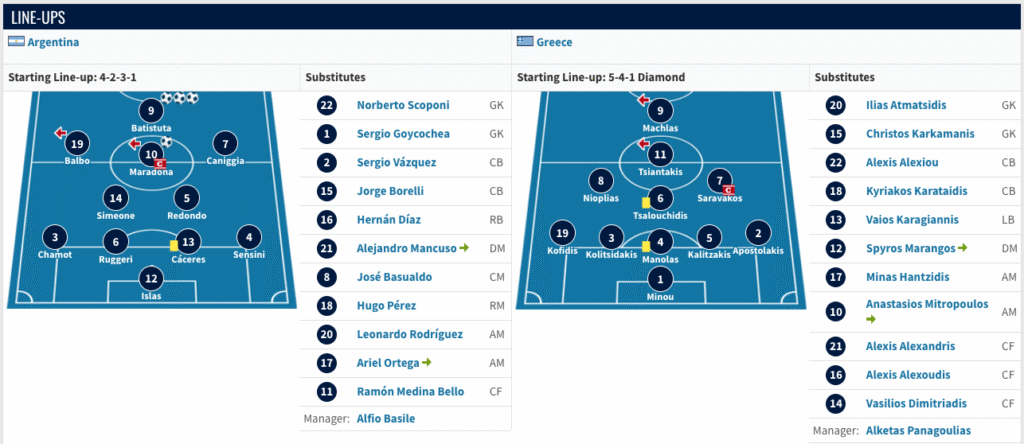
They were a class above Greece and punished their poor defending. I have written above about the Greek defenders committing to challenges with sliding tackles, and this for me was one of the big reasons Greece suffered so many goals conceded.
Argentina scored after just two minutes of play, and in doing this piece I started to wonder how Argentina ended up with four attackers versus one Greek defender to net the opener.
Well, after Tsiantakis lost possession in Argentina’s half, the Argentines started to pass upfield. Kalitzakis came diving in on Batistuta in the Argentines’ half! Manolas then committed to an interception near the halfway line which caught air, and then you had Batistuta with three teammates bearing down on Kolitsidakis and Minou in goal. Batistuta’s shot wass not a hard one, but 36-year-old Minou failed to save and 1-0 it was. Had Manolas and Kalitzakis simply stayed back, this does not happen. I also argue that had Atmatsidis (25 years old at the time) started this match, he would have saved this shot.
Argentina’s second goal was also very avoidable. Jose Chamot made a good run into the middle of the Greek half. Kalitzakis again came lunging in and caught air. The pass then went to Batistuta, because Kalitzakis had now left Manolas with two attackers running at him. It gave Batigol the opportunity to fire a bullet past Minou, who had to leave his line after Kalitzakis caused an avoidable overlap – 2-0 Argentina.
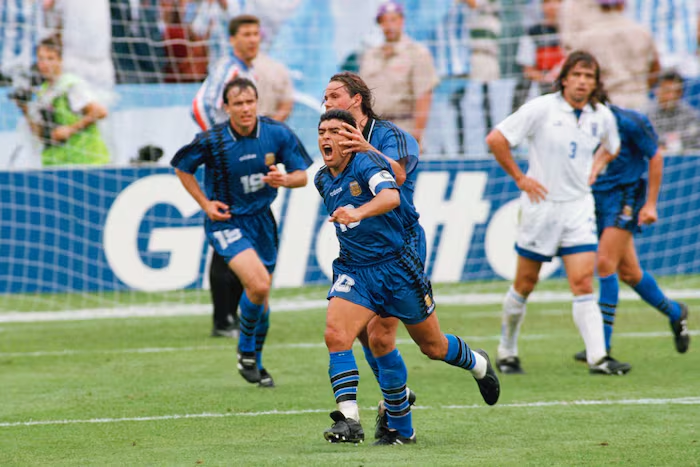
Argentina’s third goal was all class and summarised what a team they were with Maradona in it.
Greece conceded a fourth goal, a penalty due to handball by Apostolakis in the box, a very unlucky incident but again, completely avoidable if the Panathinaikos defender stays on his feet.
I find it hard to comprehend that such basics cost us so much, but I think a real lack of international experience and some basic defending skills really cost the Ethinki here, and this was never picked up and coached. These were experienced defenders, yet would lunge in at any chance they got which really boggles my mind.
Argentina created some great chances, but Greece held the ball well, something that gets overlooked due to the overall scorelines. Nioplias had an ordinary game, with almost all of his crosses overhit.
Game 2: Bulgaria
By this stage, Panagoulias had many critics, many concerned by his outdated philosophies and in particular by his player selection. These voices went up a notch after the Cameroon defeat at Karaiskakis Stadium as the ageing Greek team were opened up for the first time since qualifying for the World Cup in a 3-0 loss.
The loss to Argentina was hard to take, but everyone expected something to come from the Bulgaria game. The Bulgarians themselves were coming off a heavy 3-0 defeat to Nigeria, although they were a little unlucky in some refereeing calls.
Panagoulias made six changes from the Argentina game. For the record, two of the moves I agreed with. Atmatsidis was brought in for Minou in goal, and Hantzidis started the match, a player in his prime that provided the team with much-needed speed and penetration.
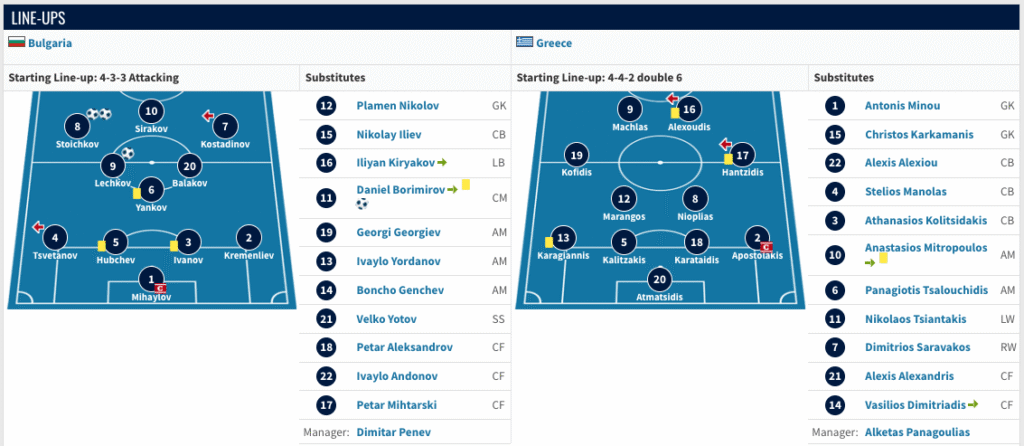
Alexoudis over Saravakos, Dimitriadis and Alexandris I can’t figure out. The striker started for his fourth cap and I assume because Panagoulias was hoping the OFI combination with Machlas would work well.
To allow Kalitzakis to start over Manolas after the mistakes he made in Boston was a terrible call, while Karataidis started next to him.
The match started as badly as it could have done in Chicago’s Soldier Field in front of 64,000 fans, most of whom were supporting Hellas.
Just five minutes in, a Bulgarian freekick was delivered into the penalty area. Alexoudis went up for a header but, like always, instead of staying on his feet, he tried to win a foul and fell onto the grass. In doing so, he landed with his hands on the ball and a penalty was awarded. Now the call could have also gone as a freekick to Greece and changed everything, but as the luck would have it, the UAE referee awarded the penalty which Hristo Stoichkov stuck away.
Ten minutes into the second half and another silly play, this time by Atmantzidis, after a long ball was played into the box that Nasko Sirakov met, Kalitzakis did well to put him off without bringing him down and his shot was saved by the AEK keeper, and with Kalitzakis all but controlling the ball, Atmatsidis then tackled Sirakov… another silly penalty to Bulgaria and, despite the close save attempt by Ilias, 2-0 down.
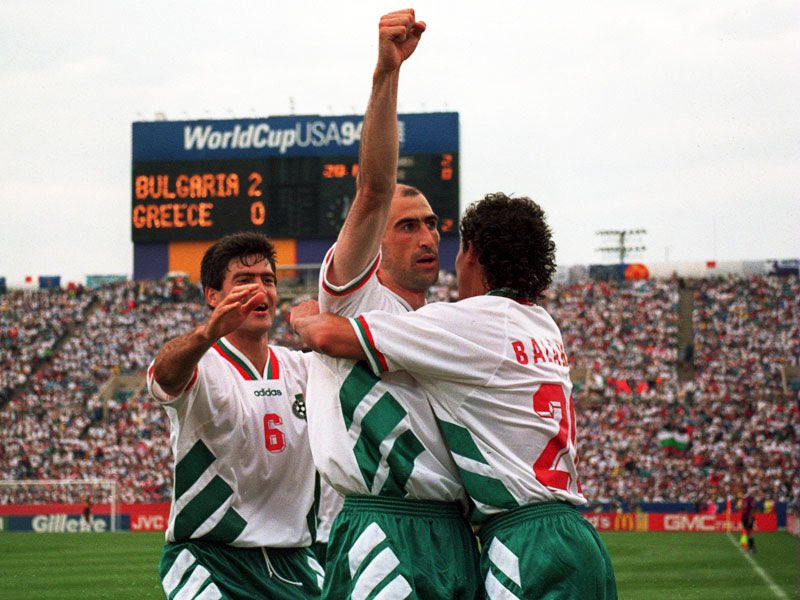
Terrible defending from Kalitzakis led to Bulgaria’s third goal, again committing to the guy with the ball instead of keeping his position, allowing Bulgaria to play a one-two and Yordan Letchkov was through on goal to make it 3-0.
Greece went close to a historic first-ever World Cup goal with Dimitriadis only to see Bulgaria make it 4-0 at the end of the match. The win was Bulgaria’s first at a World Cup on their 18th attempt.
The result broke millions of Greeks hearts all over the globe. People cried, people were angry and the knives were out regarding what everyone was sceptical about in 1994.
Game 3: Nigeria
An already humiliating campaign now relied on a goal to at least end the World Cup with something to smile about, although the truth is everyone had lost faith in the Ethniki and comments made about Panagoulias took every extreme.
The final match was played in Boston. Unlike the first two games, which kicked off at 12:30pm and 11:30am, believe it or not, the Nigeria game had a more familiar 7:30pm kick-off.
Panagoulias made another five changes to the line-up with Bulgaria. Another goalkeeper was used; this time Karkamanis started, meaning we played with a different goalkeeper in each game.
Amazingly Kalitzakis survived every match and started in all three despite his costly errors in defence, and Manolas stayed on the bench again, this time for PAOK defender, Alexis Alexiou.
Kofidis, Machlas and Nioplias were the other players that started in all three games. Against Nigeria, Alekos Alexandris got a start in his only appearance at USA 94.
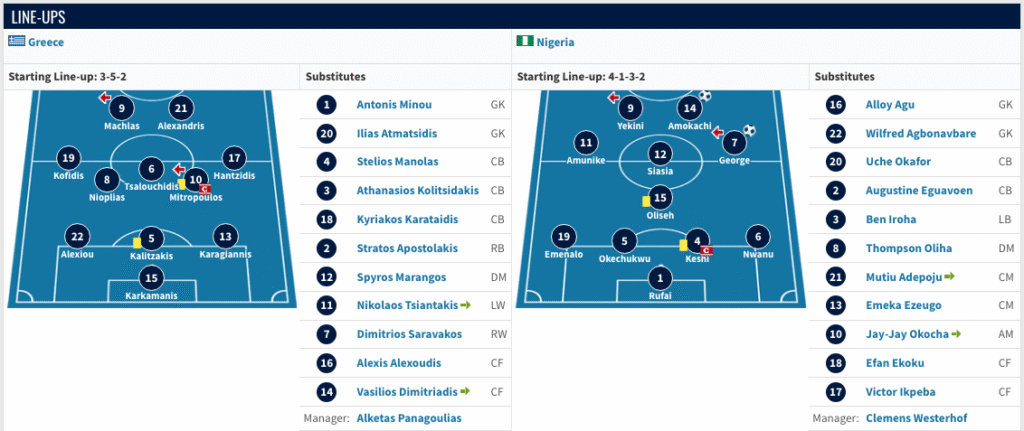
Greece played their best overall game in this night match, and as everyone was looking to see the team not go into half time down on the scoreline, a Nigerian counter-attack in stoppage time again found the defence out of position. Alexiou committed and found air, as we had seen with our defenders many times. Finidi George then delightfully chipped Karkamanis to make it 1-0. Watching the lead-up, why Kalitzakis is not at the centre of defence when this break is made is beyond me.
The Ethniki tried desperately get a goal in the second-half and put forward their best move when a forward pass from Hantzidis found Dimitriadis, a wonderful back heel move found Tsalouchidis in the box, his shot on target was saved by Peter Rufai, and it would be the closest Greece got to the goal we were so desperate for.
Five minutes into injury-time and Daniel Amokachi put the nail in the coffin with a rocket shot into the top corner that would turn out to be one of the goals of the tournament.
For Greece, it was the 10th goal conceded and the end of their nightmare World Cup campaign.
Half-time footage emerged from this game, showing Panagoulias shouting and swearing at his players, demanding they shot instead of dribbling to get a goal.
Final Standings

The Conclusion
There are many things to consider here and many things that have been said over the years, so let’s have a look at that.
1. New York
An early issue that could be pointed at was Panagoulias and the Greek Federation taking the team to New York one month before the tournament started. The team was taken to too many events to be shown off to omogenis at various events. Players were bored and this tired them. There was also a big amount of poorly organised events that tired the team and created a tough moral in the dressing room.
A lot of media were also in the same hotel as the team and this did not help. The team leaving The Big Apple for Boston was a welcome relief it turned out.
So you have to consider, was the team better off staying in Greece and focusing on football, or getting to NY and having fewer social commitments? For all the ifs and buts, the truth is the players did a good job against America and Colombia in the friendlies played there; you cannot discount that.
2. Panagoulias
Firstly, you need to look at the coach – Panagoulias himself. I do believe his philosophies were outdated, and watching his reactions, comments and actions does confirm this for me. The very fact he went for aged players did not do him a lot of favours, although this group of players did salvage qualification in 1993. At the same time, it’s clear many had seen their best years before this campaign and our qualification group was one from which we should have been able to qualify.
Before I dive into that, it was clear Panagoulias ‘demanded’ players respect him and did not like any form of liberal actions from them. This is highlighted in a contra that happened with him and Manolas just before the team left New York for Boston. Manolas had told journalists about his disappointment at their reporting (they were saying the team went to NY for the money) and that it had made the team look like a circus.
I was surprised to see this angered Panagoulias so much and it caused a real stir. Panagoulias even asked the entire playing group if they wanted Manolas to stay with team or be excluded back to Greece. The players voted he stay, but why this created such a reaction from Alketas I don’t know exactly. The reaction spoke for itself and he would get very fired up if he saw any form of criticism to his approach.
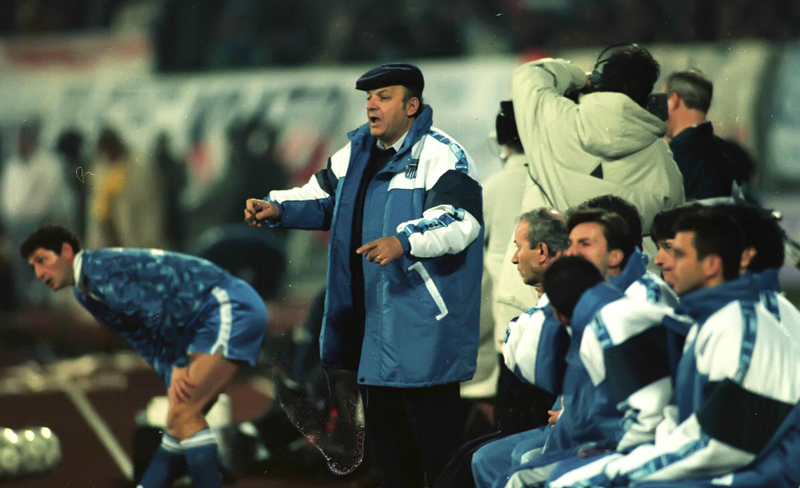
The two would clash again, when Manolas confronted the 60-year-old coach about events that happened in New York City when the team were training and playing in Boston, which of course did not go down well and this created a heavy atmosphere within the group.
A fan from Chicago who happened to be at the hotel the team was staying at before the Bulgaria game described the look on the players’ faces after the line for the match in Chicago as “they looked like they had seen a ghost.” The case is confirmed as the fan asked Dimitriadis why that was, and the AEK striker reportedly responded with, “I can’t tell you, but look at the starting line up tomorrow.”
3. Honouring an older generation
A glaring topic was this – this tournament was used to honour off players who had served the Ethniki well over the 1980’s till then. Panagoulias took over the team in September of 1992, by which time the team had already played their first match with Iceland. The Ethniki was a different team before Panagoulias took over – of the USA 94 group, only Manolas, Kalitzakis, Tsalouchidis and Tsiantakis were regulars, and there were some regulars who would be weeded out under Alketas. They included AEL legend Mitsibonas, Stefanos Borbokis, Giorgos Toursounidis and Vassilis Karapialis.
4. Talent Available
Added to that, there was a growing list of very talented players coming through the ranks and they were getting caps, these included: Donis, Giorgos Kapouranis, Petros Marinakis, Kostas Chaniotakis, Marinos Ouzounidis, Dimitris Markos, Alexandris, and Frantzeskos to name a few from mid-1992. By 1993, there was some great talent that Alketas only gave a sniff of the Ethniki to; they included Tsiartas, Toursounidis, Georgios Georgiadis, Vryzas, Kasapis and I have to say, whilst not a youngie, I thought Kostas Antoniou showed pieces of skills and vision that the regular bunch didn’t in midfield.
The only dekari we had on the team was Nioplias, a very fit player but he never possessed the attacking ability of Tsiartas, even if the AEK midfielder was 21 at the time. Frantzeskos was 25 at the time and simply should have been there.
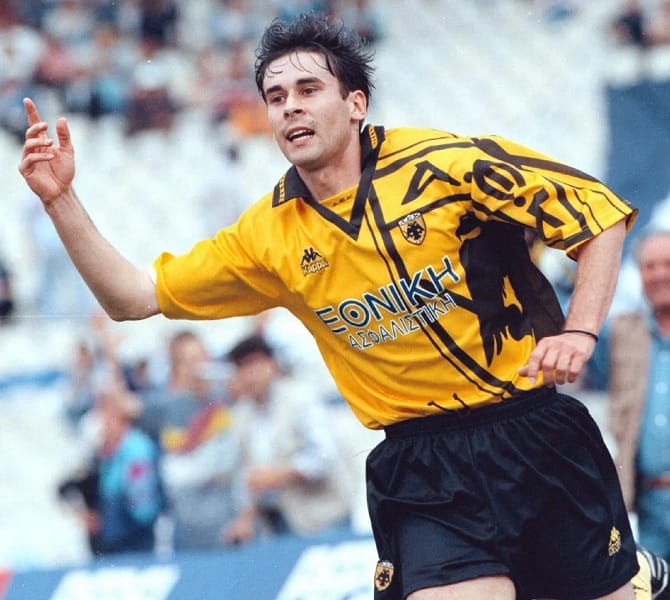
Kofidis, who was called up at the age of 33, at the expense of Toursounidis is another opportunity missed, as is playing Tsiantakis on the left instead of Donis, who was 24 at the time.
5. Players Picked
Players picked – this is a big one. It should be noted going into the Argentina game some of the ages of some players:
- Anastasios Mitropoulos – 36
- Antonis Minou – 36
- Savvas Kofidis – 33
- Dimitrios Saravakos – 32 and about to turn 33
Kofidis was called up after the qualifiers. Prior to this, his last game for Hellas was in September 1991. His scoring record was very poor for a midfielder and the last time the Ethniki scored with him in the line-up was in April 1991, in a friendly with Sweden.
Saravakos was called up in the penultimate game of the qualifiers, against Luxemburg. In that game he scored an amazing goal and everyone knows what Saravakos can do and he is no doubt one of the best Greek players we have seen. By the time of the World Cup, his better days were behind him. However, I would have used him at the very least over Alexoudis in the last two matches. He only played against Argentina.
Antonis Minou was the goalkeeper used for most of the campaign. A satisfactory keeper, he had previously played five games for Greece, the last in 1988! Panagoulias brought him back into the national team at the age of 36! Unheard of stuff, and really Atmatsidis should have been the clear No. 1, with Karkamanis and Chaniotakis next to him.
Tasos Mitropoulos was another player Panagoulias brought back in. His last game for Greece was in May 1989. He was last a regular for the team in 1988 (he only played twice for Greece in ’89). ‘Rambo’, as he was called then, was also 36 years old when he played in the away game against Iceland. He turned 37 a month after USA 94 finished.
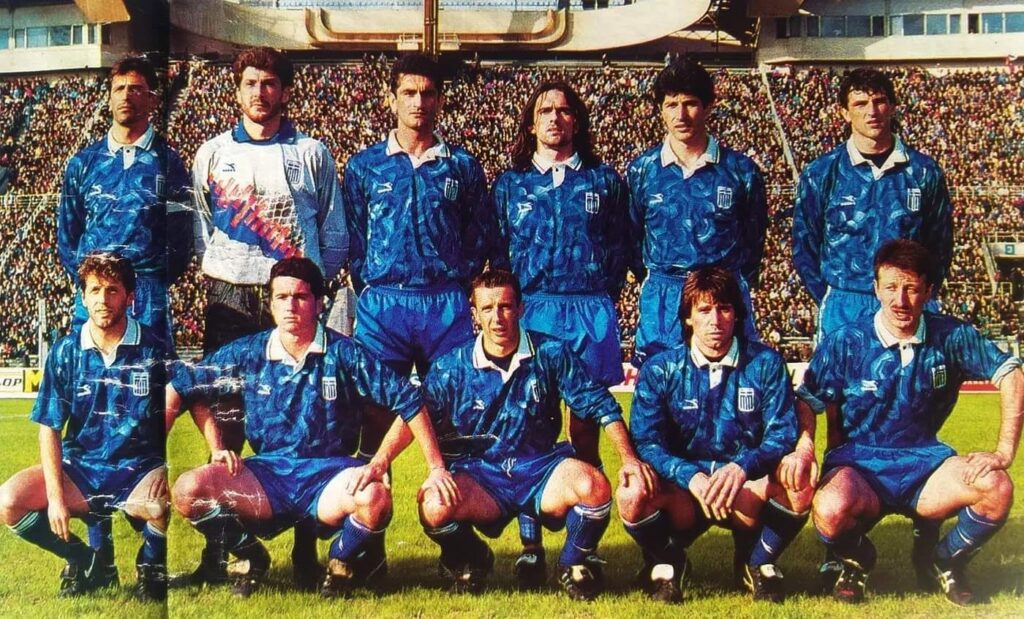
To be fair, Rambo played well in the qualifiers, but by the time 1994 came around, he had clearly lost some pace and it would have been good to see younger players have this chance.
The fact that most of the squad and key players used would finish with international football after this World Cup speaks volumes about Panagoulias’ selections.
Of all the players picked, only Apostolakis, Kalitzakis, Tsalouchidis, Alexandris, Atmatsidis and Machlas would go onto have an international career with the Ethniki. That is six players of the 22 in the squad, whilst a vast majority of the squad retired or were never picked again. This is a huge stat that, for me, highlights a wasted opportunity, and I will tell you why.
6. Tactical and defensive mistakes
Despite the heavy scorelines, I have highlighted the silly goals the Greek team conceded. Even before the World Cup, the signs were there, but if you look purely at USA 94, the mistakes Kalitzakis makes are incredible.
Panagoulias played a 4-4-2 most of the time. In many games I struggle to see who was playing left-back, and when we did, we had Karagiannis there and not Kasapis… the difference in class between the two is gigantic.
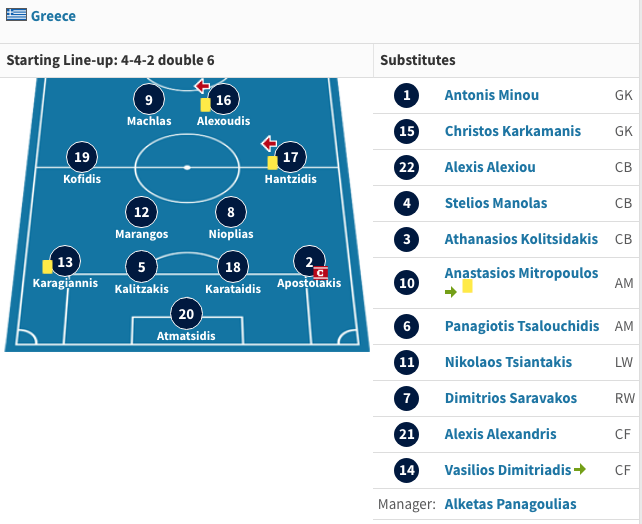
Most of the time, Greece played with just Tsalouchidis as a defensive midfielder. Nioplias, Kofidis, Tsiantakis, Hantzidis and Marangos were all midfielders in front of him.
In analysing the games, I saw Kalitzakis especially make many mistakes that were very costly by constantly committing to slide tackles that created easy opportunities to the opposition. He was used to playing under a 3-5-2 (or 5-3-2) system at Panathinaikos. He had the help of a libero and defensive midfielders like Dimitris Markos and Louis Christodoulou. Markos was an incredibly underrated talent who I think would have helped the team considerably. The mistakes kept coming in all games from Kalitzakis, but clearly this was never identified by Panagoulias and his staff.
Even if that is missed though, Manolas should have been next to the PAO defender in both remaining matches instead of watching on from the bench.
Besides Markos, I believe Zagorakis, who was 23 at the time, could have helped in a holding midfield role. He was capped in Greece’s next match in September against the Faroe Islands and went on to become a regular in that spot.
7. The sign that was missed
So taking all these selections, tactical, and on-field mistakes into one bowl, there was one game in our path that makes you really wonder what Hellas could have done at USA 94. Remember, even with these selections that Panagoulias made, the team did qualify well – warnings signs were there in the meantime with a real lack of goals. Even in qualifying, we only scored more than one goal in the matches with Luxemburg.
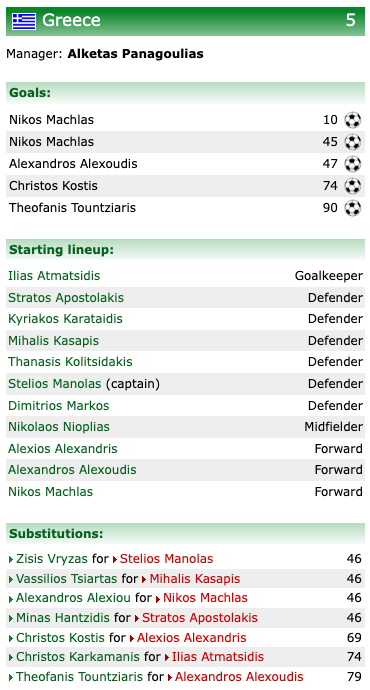
In the friendly match against Saudi Arabia – a team already set for the World Cup, and who would make the round of 16 – in April 1994, Panagoulias used Atmatsidis, Markos, Kasapis, Tsiartas, Kostis, Alexandris and Vryzas. Greece won 5-1 and played nice, open football, as well as creating many more chances with the real younger talent we had at our disposal.
Those players would not play again together till after the 1994 World Cup in another 5-1 win that kicked off the Euro 96 qualifiers. That was followed with a 4-0 win over Finland in Piraeus, and by then only four players that had been through the Panagoulias World Cup 1994 saga played for the Ethiniki.
I’ll close by saying, what could have been. Had we seen these talented players continue after the Saudi Arabia game and taken us to America, with some better tactics, it could have been something pretty special, I think.



Leave a Reply