
In football, even the hardest falls can lead to the biggest rises. That is certainly the case for OFI.
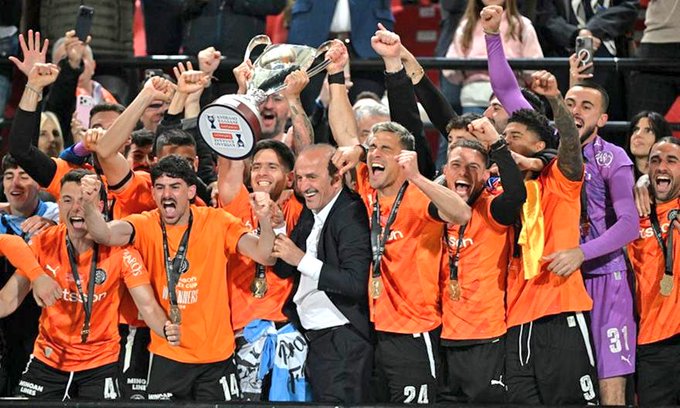
The Cretans officially re-established themselves as one of the biggest clubs outside of Greece’s ‘Big Four’ by lifting the second Greek Cup in their history, defeating PAOK 3-2 after extra-time at the Panthessaliko Stadium in Volos.
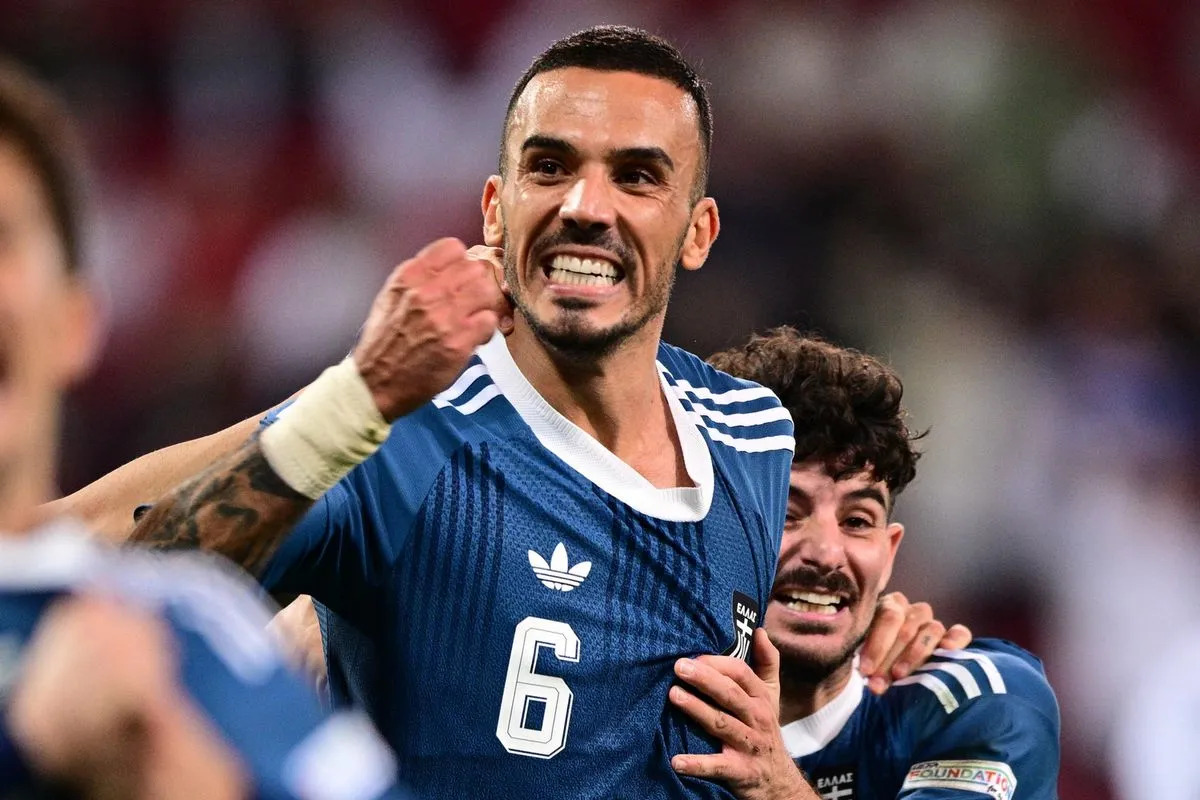
Jubliant celebrations from the fans, players, coaching staff and family members after the final whistle showed the true beauty and emotion of the sport and what it meant to everyone involved, just months after the club also celebrated their 100th anniversary.
It is the first time since AEL in 2007, that a team from outside Athens and Thessaloniki has won a major trophy.
OFI have also now qualified for the UEFA Europa League play-offs, while also guaranteeing themselves a place in next season’s UEFA Conference League league phase.
But to understand why this trophy win is so significant to the Cretans, beyond the reasons I just mentioned, we must look back at the last decade.
Way back when, during the 2014/15 season, OFI were in deep trouble.
Despite finishing 6th the previous season, their joint highest finish in the Super League era, the club racked up a mountainous debt due to significant financial difficulties.
The club were deducted 29 points, ten of those due to failure to pay former players’ wages.
After the administration were unable to stabilise the club financially, OFI were forced to withdraw from professional football and compete in the Gamma Ethniki.
Under new management and debt-free, OFI spent the next three seasons climbing back to the top flight.
They won both the Gamma Ethniki and Football League (now Super League 2) titles.
They experienced highs of finishing 6th in 2019/20 and lows of narrowly avoiding relegation in 2020/21.
Previous manager Milan Rastavac guided OFI to their first Greek Cup final in 35 years, but lost 2-0 against Olympiacos at OAKA.
It was clear where the team’s priorities lay, with no wins during the play-offs that season, due to OFI having secured their safety from relegation.
But that poor run of form bled into the 2025/26 season, with only two wins in their first seven games, Rastavac was sacked.
To their credit, the club had assembled a very strong team.
They boast one of the highest percentage of minutes given to Greek players of any team in the Super League, with only 11 foreign players out of a squad of 31.
The likes of goalkeeper Nikolaos Christogeorgos, captain Vasilios Lampropoulos, Thanasis Androutsos, Zisis Karachalios, Taxiarchis Fountas and Ilias Chatzitheodoridis all bring a wealth of experience.
Talented younger players, like Giannis Apostolakis, Konstantinos Kostoulas and Giannis Theodosoulakis, actually get game time and a chance to shine.
Lastly, quality foreign imports such as Borja Gonzalez, Levan Shengelia and the talismanic duo of Eddie Salcedo and Thiago Nuss make for an excellent blend that was the key to OFI’s eventual cup success this season.
All the squad needed was a coach that could sew it all together, as, despite the sum of their parts, it had felt up till recently, OFI had not quite realised their true potential and were perhaps playing below their capabilities.
- READ MORE: Hit or miss? Rating every Olympiacos transfer since 2024
- READ MORE: Fallen giants: The biggest clubs outside the Super League
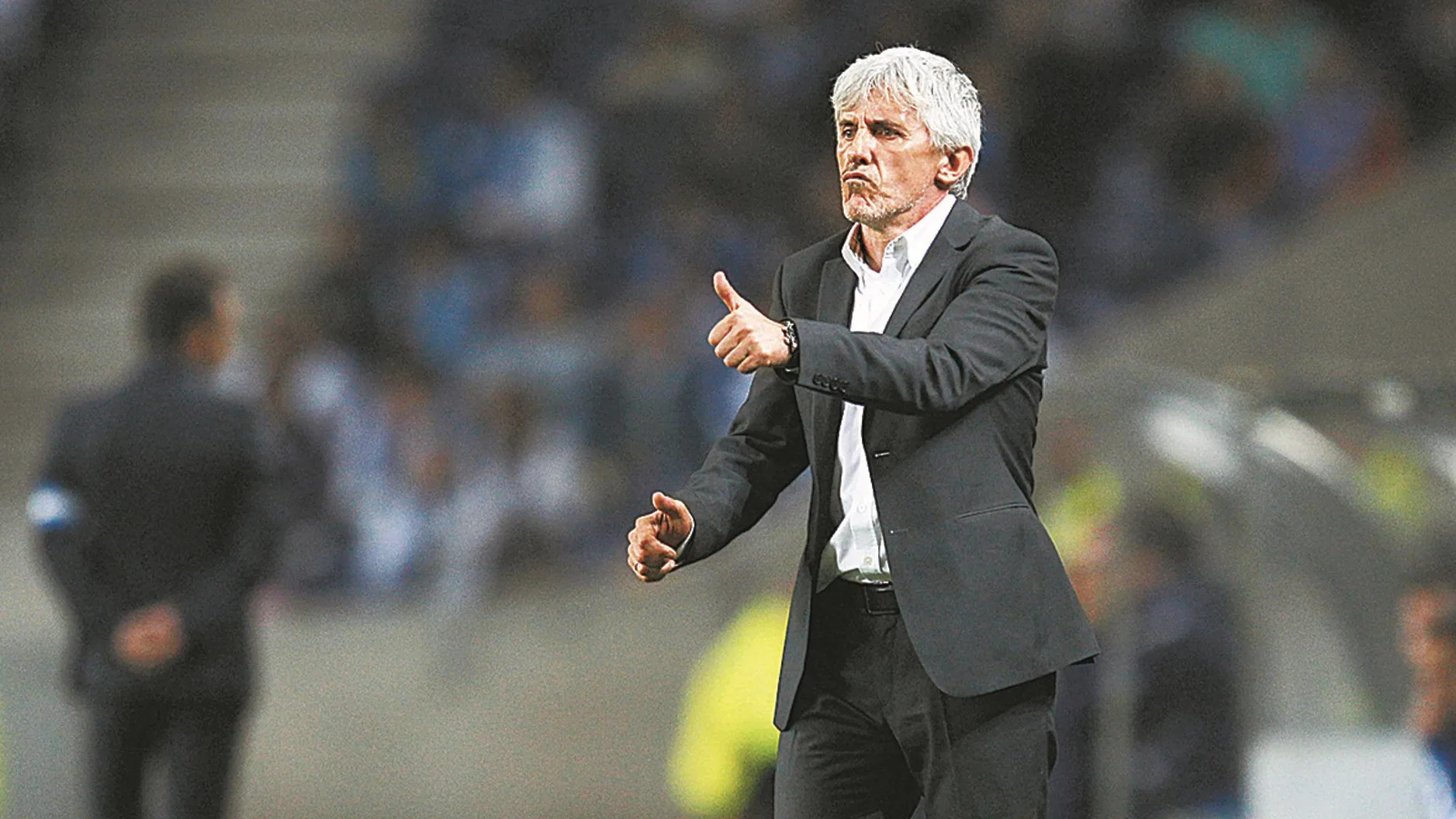
That is where Christos Kontis comes in.
The former Olympiacos and Panathinaikos assistant coach, who had previously won the Greek Cup as interim manager of the Prasini in 2023/24, achieved an even greater feat with the Cretans.
Upon his arrival, Kontis tweaked the team’s tactics and changed the formation from 4-2-3-1 to 3-4-3.
OFI began to pick up form after the new year, only losing three matches in 2026 by the time they picked up the trophy in Volos.
This run blasted the Cretans up the table, with them now even looking likely to pip high-flying Levadiakos to top spot in the Europe play-off group.
It is worth mentioning that finishing top is now redundant, with OFI having taken the last European spot by virtue of winning the Greek Cup.
This leads us on to the cup run itself.
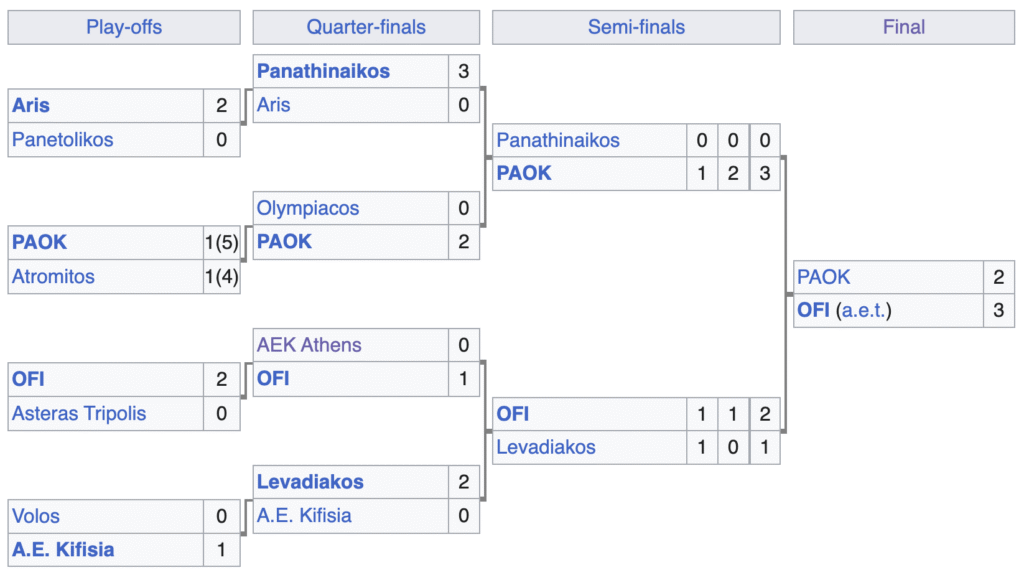
Having finished sixth in the league phase play-offs, OFI knocked out Asteras Tripolis and set themselves up for a monster tie with AEK in the round of 16.
The Cretans shocked Enosis in a narrow 0-1 win at Agia Sophia with Salcedo scoring a late winner.
Levadiakos awaited them in the semi-finals in an even tie due to the form of both sides in the league.
Over two legs, it was OFI who emerged victorious.
After a 1-1 draw at Pankritio. captain Lampropoulos scored the goal which would ultimately send his team to their second consecutive Greek Cup final.
Fellow finalists PAOK, incidentally, were coming into this game in patchy form.
But there was an assumption from most neutrals that Dikefalos were still the favourites and would claim their ninth Greek Cup.
Initially, the final started as expected, with Giannis Michailidis heading the cup favourites ahead after 15 minutes.
However, Taxiarchis Fountas equalised, and although PAOK dominated the stats in both possession and shots, it was OFI that took a surprise lead in the second-half with Thiago Nuss making it 2-1.
The Cretans thought they had held on to win in added time, only for Alexander Jeremejeff to equalise in the 97th minute.
Before the end of the first half of extra-time, OFI won a penalty.
Substitute Aaron Leya Iseka stepped up and scored the most important goal in the club’s recent history, one which would ultimately hand them the Greek Cup.
From where OFI found themselves just over a decade ago to today is a real feel-good story – from deep financial issues, relegation and relinquishing their professional status in 2015, to re-establishing themselves as a Super League club and winning their second major trophy in 2026.
With a talented squad full of domestic players and a Greek manager, it is a truly wonderful story for Greek football.
I, for one, am looking forward to seeing how the Cretans fare in Europe and how far Christos Kontis can take his team in all competitions next season.
Leave a Reply