Levadiakos are on the brink of a mind-blowing achievement.
For six straight seasons, no one has dared to break the five-fold stranglehold at the top of the Greek Super League table – Olympiacos, PAOK, AEK, Panathinaikos, and Aris locked the door, threw away the key and stood laughing at the feeble bumps and muffled protestations from the other side.
The above have never had it so good as a collective. Even the early 1980s – when the aforementioned sealed off the top five for four campaigns in a row – has nothing on the pentapoly of the 2020s.
The status quo has been as such since Atromitos’ last truly heroic campaign in 2018/19.
Asteras Tripolis used to be up there too, during AEK and Aris’ descent into the nether regions of the Greek football pyramid.
You go back even further: OFI, AEL, Xanthi, Panionios and Iraklis have all laid claim to being in the best quintet in the country at one point or another. And that’s without mentioning PAS Giannina, Ionikos, Apollon Smyrnis, Olympiacos Volos, Egaleo, Panachaiki, Ethnikos Piraeus, Pierikos and even Proodeftiki, who have all finished in the top five at least once.
But those days are long gone. The ‘Big Four’ is a ‘Big Five’ now, haven’t you heard? No more room at the inn, I’m afraid. Jog on.
Turns out Levadiakos didn’t get the memo.
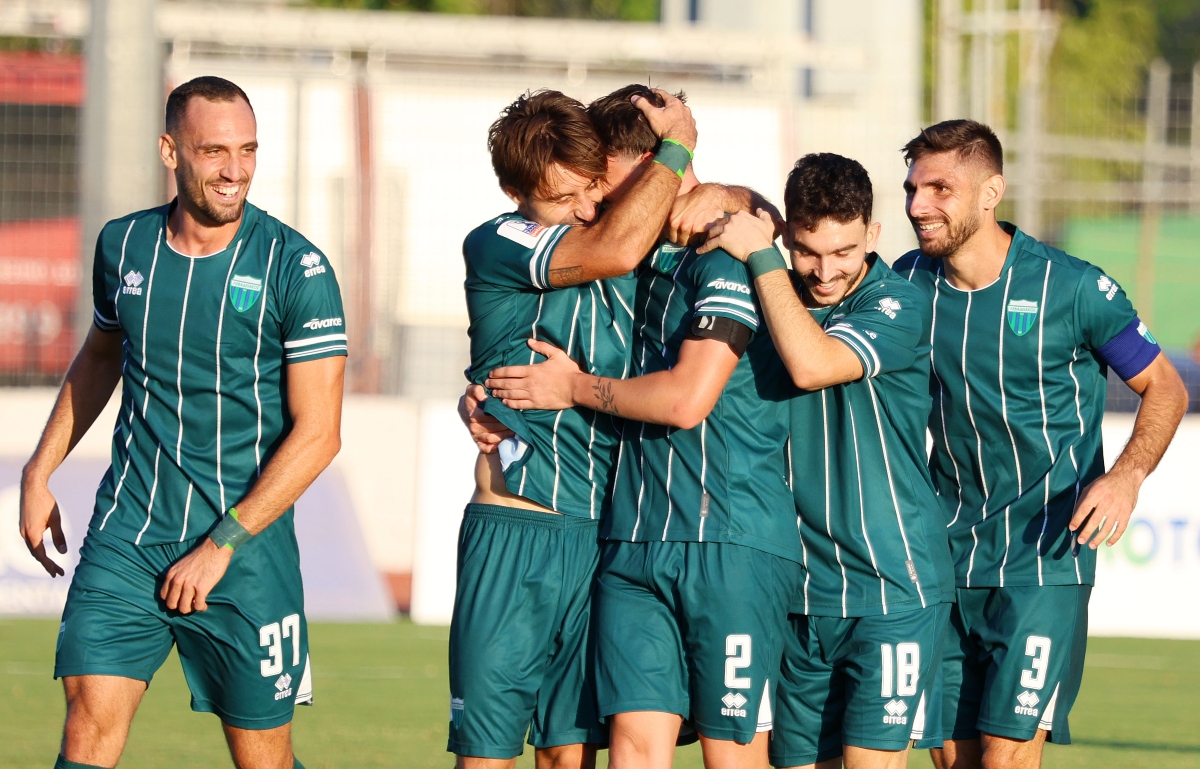
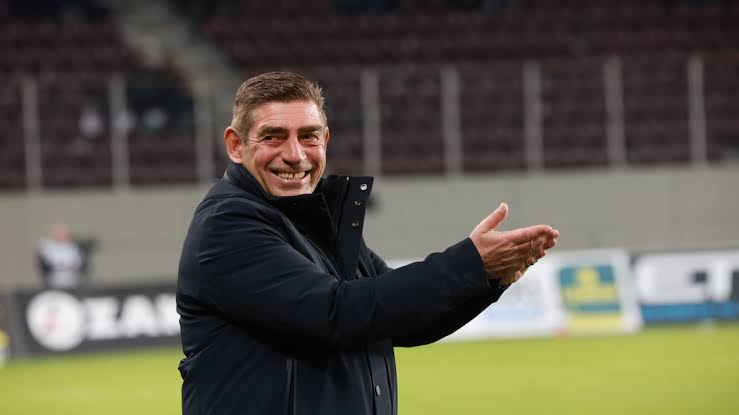
It’s frankly ludicrous, actually. It’s almost impertinent what Nikos Papadopoulos and his rag-tag band of Panathinaikos rejects and academy products could be about to achieve.
For context, Levadiakos are not a big club, never have been. Formed in 1961 from a merger of no-marks Trofonios and Pallevadiaki, they have spent just 21 seasons in the top flight – that’s 32% of their existence. What’s more, 14 of those 21 seasons have come since 2005.
The town they hail from has a population of approximately 22,000, meaning all of their inhabitants could fit snugly inside Aris’ Kleanthis Vikelidis Stadium.
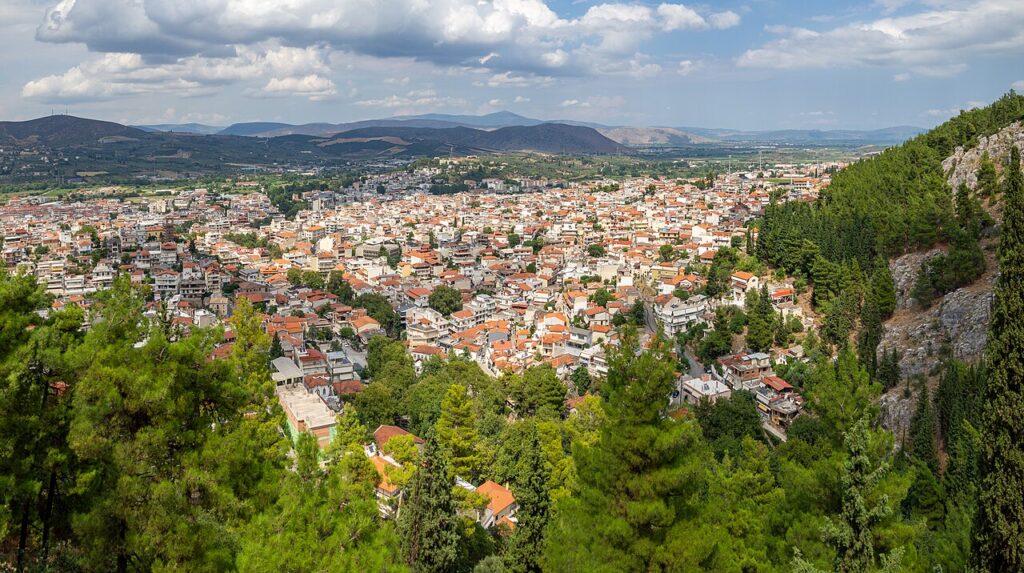
Their ground, the publicly-owned Livadia Municipal Stadium, has been their home since formation and can seat less than 6,000 fans. Not that this is usually an issue. Levadiakos’ average top-flight attendances fluctuate between 1,000 and 2,000 – roughly equivalent to a well-supported sixth-tier side in England.
Their squad is unspectacular on paper. Transfermarkt value it collectively at €11.45 million, ninth highest in the Greek Super League, approximate to one Christos Zafeiris, or Christos Mouzakitis’ left foot.
And yet. And yet.
Levadiakos are eight games away from securing fourth place – their highest-ever league finish, smashing their record of seventh from 2012. They are eight games away from confirming their maiden appearance in UEFA competitions. They are eight games away from splitting the five-club cabal in twain. In short, they are eight games away from immortality.
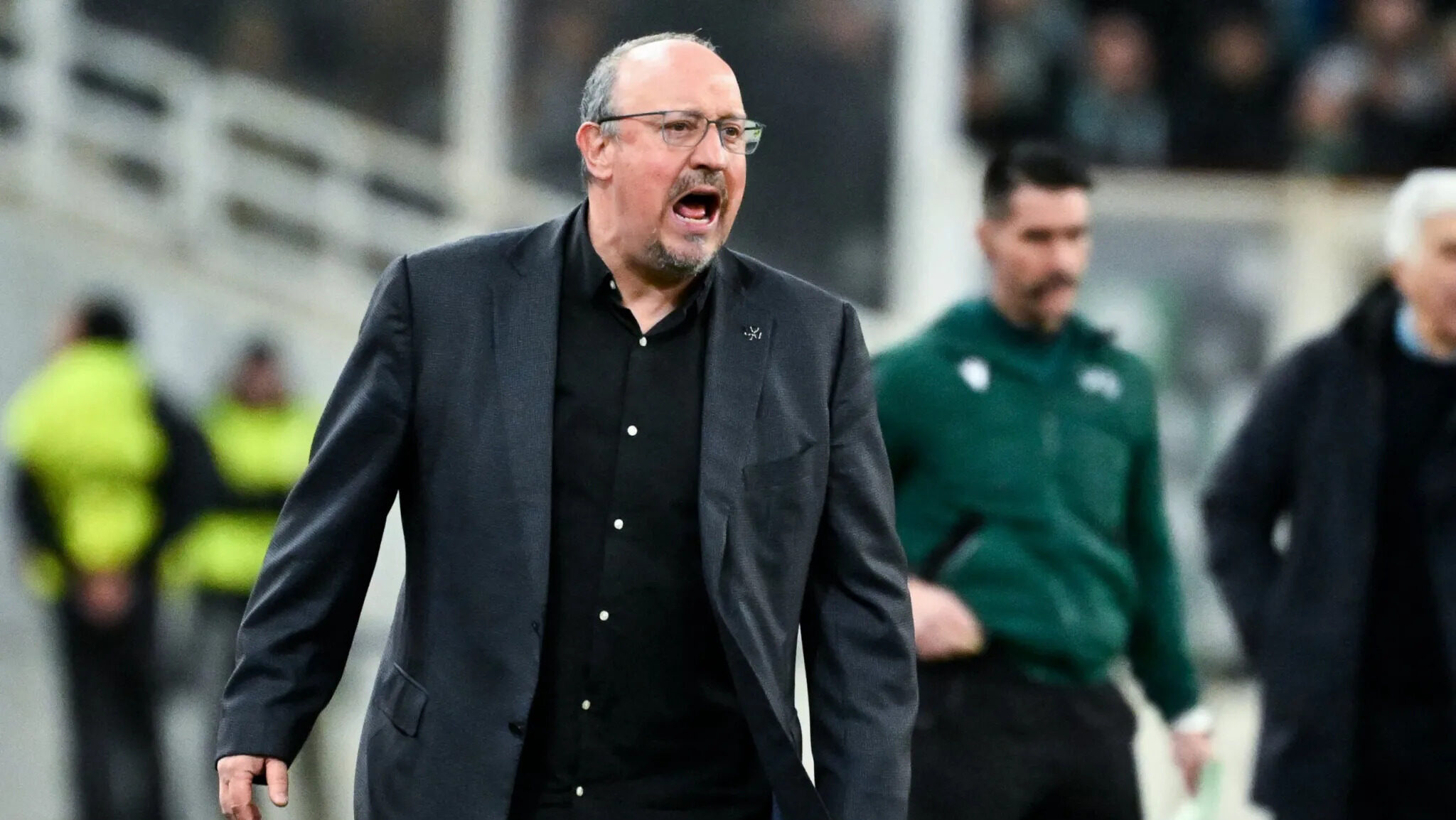
That is because APOL are currently fourth and hold a nine-point advantage over their closest challengers: Rafael Benitez’ Panathinaikos, who admittedly have a game in hand at the time of publication. There are tough tests to come too. Levadiakos must face the ‘Big Four’ in a decisive five-match spell between February and March.
In the lead up to that fateful run of fixtures, Levadiakos have a potentially historic two-legged Greek Cup semi-final against OFI to contend with. It should be remembered that the club have never reached the cup final in their 64 years of existence.
But if they do manage to end the regular season in the top four, boy will they have deserved it.
Their football has been hitherto electric, demonstrated by their staggering haul of 44 goals making them the league’s top scorers by some distance. That’s 10 more than champions Olympiacos and almost three times the number Aris have netted (16).
Alen Ozbolt – a free transfer from Hapoel Tel Aviv – and 33-year-old Fabricio Pedrozo – a free transfer from AEL – have scored nine and eight respectively, the same number as Mehdi Taremi, who was on the bench for Internazionale in the Champions League final last May.
In defence, Levadiakos are leaning heavily on their academy graduates. Their three most used players – centre-back Panagiotis Liagas and full-backs Marios Vichos and Triantafyllos Tsapras – have missed only 31 minutes of league action combined.
In front of them, Enis Cokaj, Ioannis Kosti and Guillermo Balzi offer bite, buzz and bravery in midfield.
Meanwhile, Panathinaikos outcasts Yuri Lodygin, Hordur Magnusson, Benjamin Verbic and Sebastian Palacios bring a sprinkle of invaluable experience to their ranks.
And shockingly, Levadiakos have not spent a single euro in transfer fees to assemble their 28-man squad, a squad that respectfully has no right to be challenging for European qualification.
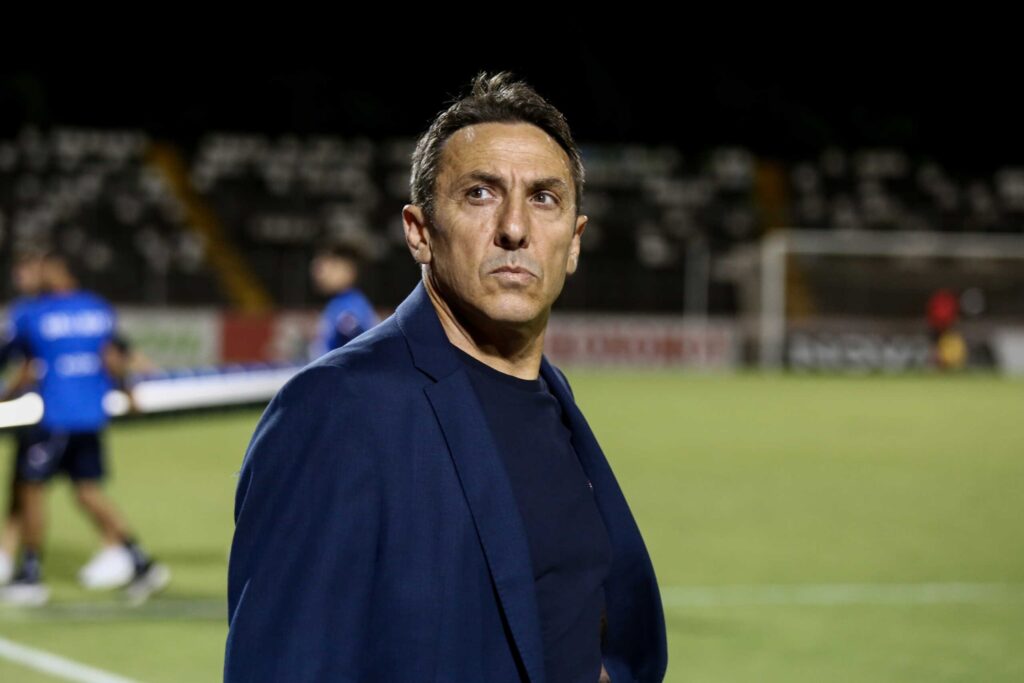
Even their head coach Papadopoulos has scant experience managing at this level. Arguably the 54-year-old’s greatest managerial achievement is guiding OFI to promotion from the second tier in 2018, and his most recent appointment was in charge of Greece’s U21 side, where he failed to qualify for the 2025 European Championship.
But what next?
The logical conclusion to all this insanity is that Levadiakos will be guaranteed European football in some form next season, as long as they finish in the top four.
Frustratingly, the destination of the Greek Cup complicates the calculation of exactly which competition and from which round APOL would enter.
- Should OFI or Panathinaikos win it, Levadiakos would get a berth in the 2nd qualifying round of the Conference League.
- Should PAOK win it, Levadiakos would get a berth in the 2nd qualifying round of the Europa League.
- Should Levadiakos win it – and what a story that would be – they would get a berth in the play-off round of the Europa League, guaranteeing them league phase participation in the Conference League at the very least.
- (*the scenarios above assume Levadiakos finish fourth)
This could be good news for Greece as a whole, though it might not appear so on first glance.
UEFA coefficients are needlessly complicated, a winding labyrinth of uncertain permutations, arbitrarily-allotted bonus points and asinine averages that even Daedalus couldn’t conceive.
But put in crudely simple terms – UEFA rewards leagues where ALL of its participants are competitive.
This is why Poland is having such an incredible season coefficient-wise. All four of their entered teams reached the league phase, and UEFA likes that. They like that a lot.
But herein lies the issue. When a league does well with four of its teams and reaches the magical top 15, they are given an extra slot and now all FIVE of their teams must produce the goods. But if your fifth-best team regularly implodes? Well then say goodbye to your fifth European spot.
This is exactly what has happened to Greece in the 2020s, rebounding from 14th to 18th to 20th to 15th to 20th to 15th to 12th. Essentially, your fifth-best team is really important, unless your other four sides are capable of picking up the slack.
If Greece harbour any hopes of returning to the heady days when the Alpha Ethniki was ranked as the sixth-best competition on the continent – from 2001 to 2003 – then the ‘Big Four’ need help.
The elephant in the room of course is that Aris have been atrocious in Europe since they regained their footing in the top flight.
In their six campaigns since 2019, Aris have not even managed to reach the play-offs in UEFA qualification. Their record stands at eight wins from 17 matches, suffering humiliating eliminations at the hands of Molde, Kolos Kovalivka, FC Astana, Maccabi Tel Aviv, Dynamo Kyiv and Araz Naxcivan.
Their transfer policy during this period has been scatter-gun and scatter-brained in equal measure, undoubtedly having a catastrophic effect on their early season wobbles as they struggle to integrate a panoply of newly-arrived mercenaries and journeymen.
Personally, I will be delighted to see them miss out on European qualification as punishment for their flippant attitude towards UEFA qualifying.
Is this to say that I reckon Levadiakos have a better chance of qualifying for a league phase by virtue of their relative stability and team harmony? Quite possibly.
There is of course still a long way to go before APOL can celebrate their first-ever European bow, and I would be shocked if the likes of Panathinaikos and AEK can resist a summer raid on their brightest talent.
But more pertinently, the rise of Levadiakos is indicative of a far more promising prospect for Greek football as a whole.
A competitive league is a good league. UEFA coefficient rules dictate as much.
If Greece’s top flight is to reclaim its glorious past, it needs all of its teams to stand up and be counted.
The ‘Big Five’ is dead. Long live the league.
Leave a Reply